
- This event has passed.
2025 Technology in Architectural Practice Symposium
The 2025 Technology in Architectural Practice Symposium brings together bold ideas and breakthrough tools transforming the way we design and build. From the transformative power of AI to the insights unlocked by BIM and the breakthrough possibilities of Reality Capture, this year’s event spotlights the innovations reshaping today’s architectural practice. Join us to get inspired, make connections, and see how technology can elevate your work today—and tomorrow.
5 LU
Speakers

Ryan Johnson
As an Associate Principal and architect at Clark Nexsen, Ryan champions technology’s role in shaping design. Leading the firm’s Computation and AI Hubs, he was instrumental in developing its AI strategy, and his computational approaches have contributed to numerous award-winning projects. Previously, Ryan founded the firm’s Tech Studio, led the national AIA TAP knowledge community, and earned a spot on ENR’s National Top 20 Under 40.
Building with Logic: A Practical Intro to Computational Design
Discover how to translate your design intent into simple rules and data to solve complex challenges. This session introduces computational design, demonstrating how it’s not just for complex forms, but an invaluable tool for boosting creativity and efficiency on projects of any budget. You don’t need to be a coding expert to get started. We’ll bridge the gap from concept to reality, showing how this method connects to BIM for clear documentation and the creation of fabrication-ready files for contractors.
Shawn Protz
Shawn Protz is an Assistant Professor of Architecture at NC State University and co-founder of the design practice Protz Studio. His work explores the frictions between digital and physical interfaces in the production of architecture navigating a wide range of media from 3D-printed clay to inflatable structures to video game engines. Shawn has taught around the US and is a registered architect in Arizona, California, DC, New Jersey, North Carolina, and Pennsylvania.
Virtualizing the Built Environment
This lecture will explore the idea of architecture as immersive worldbuilding and consider the implications of virtualizing the physical built environment using photogrammetry.
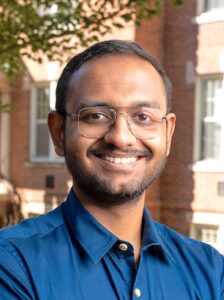
Alankrit Ganesh Rajagopalan
Alankrit Rajagopalan is a Technical Designer at Gensler. His work bridges architecture, digital technology, and visualization, with a growing interest in how AI and automation can make tools like Rhino, Grasshopper, and Revit more intuitive and seamlessly integrated into design workflows. He is also exploring new forms of visual storytelling through Unreal Engine for real-time rendering, VR and AR for immersive experiences, and Blender for motion-tracking and interactive content. Alankrit also leads workshops and training sessions aimed at broadening the studio’s engagement with emerging tools within the practice.
Vibe Coding: A Human-Centered Approach to Computational Design
This session explores how AI tools are reshaping the way architects interact with digital design platforms like Rhino, Grasshopper, and Revit. Instead of relying on complex code or data logic, designers can now describe intent in natural language, letting AI translate ideas into geometry, parameters, and workflows. “Vibe Coding” highlights how this shift makes computational design more intuitive, collaborative, and accessible across all levels of practice.

Daoru Wang
Daoru Wang is an Assistant Teaching Professor of Architecture at Ball State University and a Ph.D. candidate in Design at North Carolina State University. His research and teaching focus on computational design, building performance simulation, and artificial intelligence in architecture. With professional experience at LS3P and Harvard CAMLab, Wang integrates design technology and sustainability through both practice and research. His YouTube channel, @Daoru_Wang, with over 4,000 subscribers and nearly 300,000 views, makes computational design education accessible to a global audience.
From AI Coding to LEED-Compliant Design: Bridging Automation and Sustainability in Architecture
This presentation highlights two applications of artificial intelligence in architectural design and research. The first demonstrates how AI can assist in writing Dynamo scripts and customizing Revit tools to automate workflows and enhance productivity. The second showcases a LEED-compliant daylighting prediction website developed using deep learning, offering an open-access platform for sustainable design analysis and collaboration.
Panel
Come envision the future of our industry with Liz, Xander and Shahab.
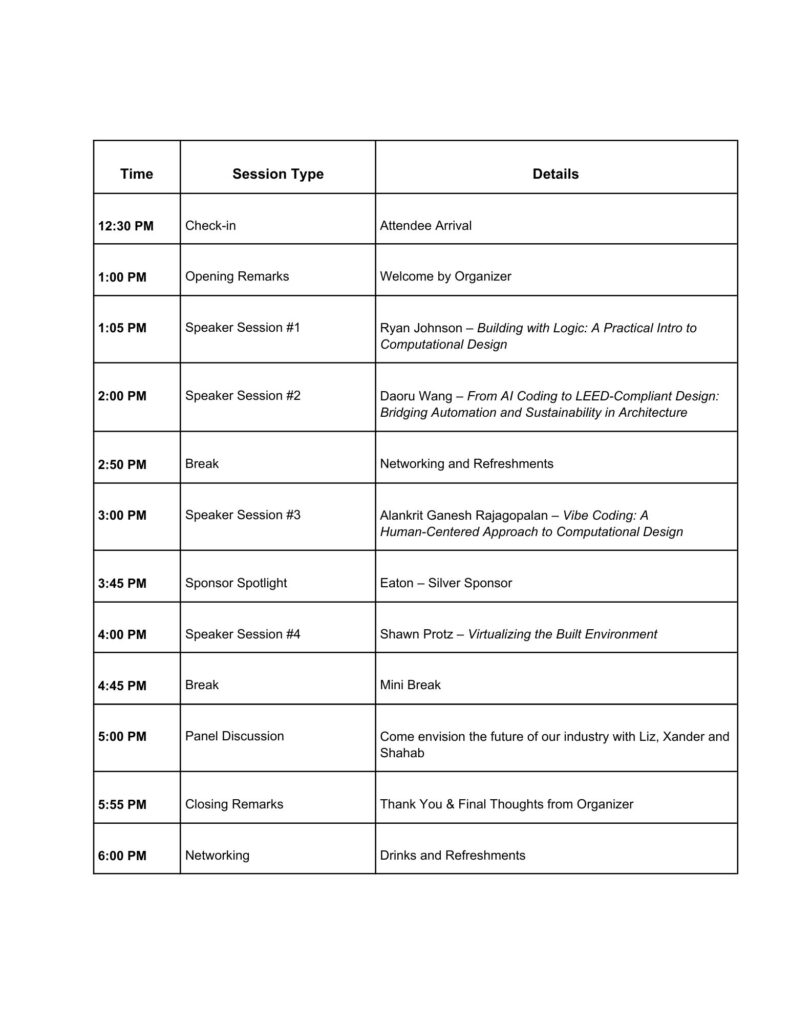
Schedule
Sponsors
GOLD

SILVER
BRONZE

FIRM SPONSOR


IN-KIND SPONSORS




Sponsoring the Emerging Tech Symposium is a chance to align your brand with innovation in architecture. The event will bring together up to 100 architects and design professionals for discussions on AI, photogrammetry, and other technologies, promoted through AIA Triangle’s network and offering continuing education credit.
Get in touch: aiataptriangle@gmail.com
Gold: $2,500
• Main Sponsor of the Event
• 30 minute slot for presentation
• Large logo on Marketing
• 10 complimentary tickets
Silver: $1,000
• 15 minute slot for presentation
• Logo on Marketing
• 5 complimentary tickets
Bronze: $500
• Logo on Marketing
• 3 complimentary ticket
Firm sponsor: $500
• Logo on Marketing
• 3 complimentary tickets